Cross-selling in e-commerce is a powerful strategy to boost revenue and enhance the customer experience. By offering complementary products to customers based on their past purchases or current shopping carts, businesses can increase the average order value and encourage repeat buying.
On the other hand, poorly executed cross-selling can feel intrusive or irrelevant, leading to a negative customer experience. The key difficulty lies in recommending the right products at the right time without overwhelming or frustrating customers.
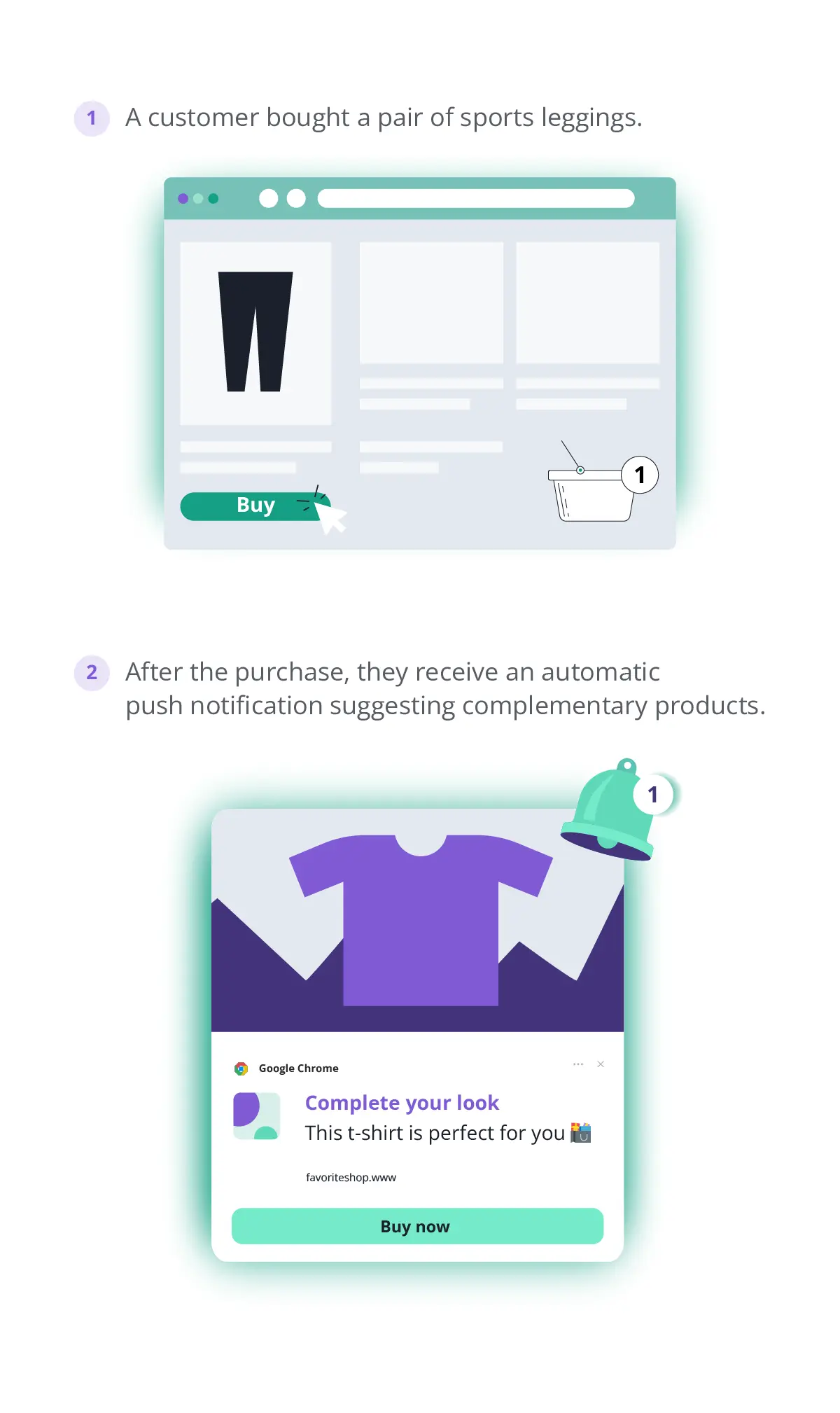
In this scenario, a customer purchases a pair of sports leggings. After the transaction (with the option to define the period after which the notification should be triggered), they receive an automatic push notification recommending a complementary product, such as a matching t-shirt, if it is in stock.
To deliver relevant product recommendations like this, it's essential to integrate with the product feed, which contains information about complementary products. By incorporating the product feed into the automation scenario, you ensure that customers receive personalized suggestions based on their purchase, enhancing their shopping experience and increasing the likelihood of additional sales.
Cross-selling campaigns are most effective when sent immediately after a customer makes a purchase. This approach can significantly boost sales, especially if the shop allows customers to combine orders, ensuring they only pay for shipping once.